
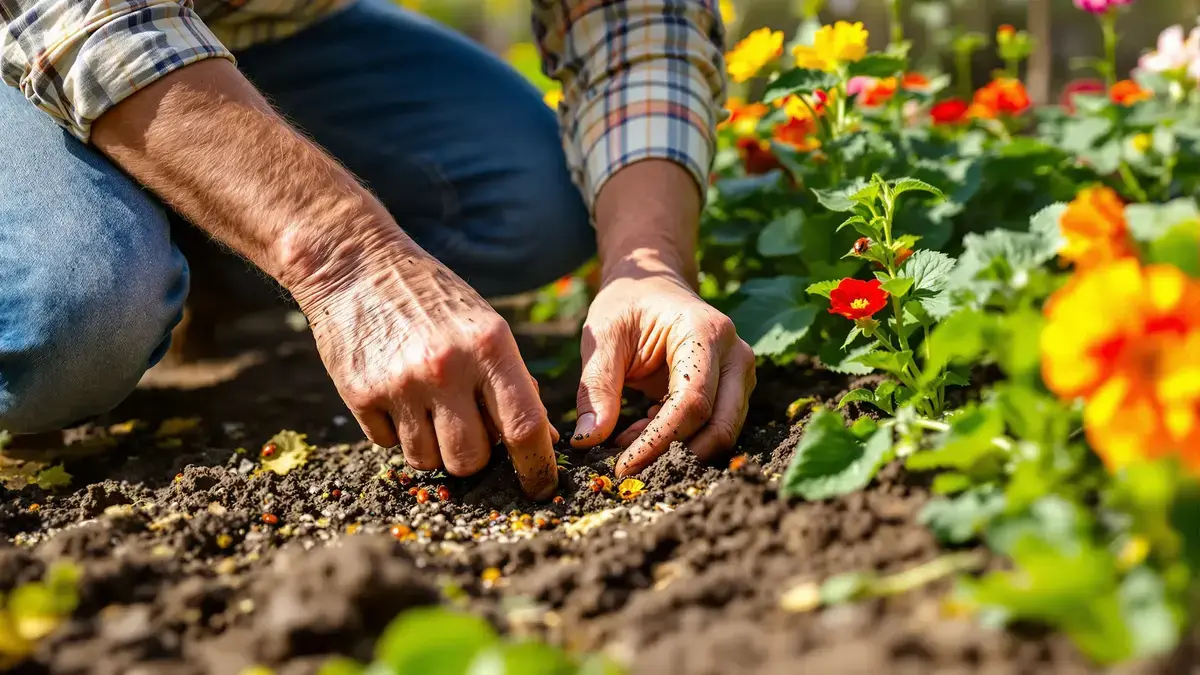

Beneath the first warm sunlight of spring, gardeners often pause, dust on their hands, as tiny green aphids begin to appear. The vivid image of bright flowers threading through veggie beds is more than decoration—it marks an old, nearly forgotten strategy. As nature wakes, timing and tradition quietly join forces to protect what grows.
April Brings Small Enemies, and Subtle Defenses
Aphids arrive early, clinging to new shoots, nearly invisible at first. By the time their clusters thicken, stems begin to curl and leaves wither. For generations, experienced gardeners have trusted a certain seed when the month turns: the nasturtium.
Planting nasturtium seeds in April isn’t a grand event. Yet it’s a move anchored in careful observation, anticipating invasion before it starts. This timing keeps delicate crops one step ahead, just as aphids begin to seek out their first meals.
Nasturtiums: Vibrant Shields in the Garden
A patch of nasturtiums quickly stands out—large, round leaves cluster like green coins, and flowers in orange, yellow, or scarlet offer bursts of color. But below their lively surface, these plants are carrying out a quieter task.
Aphids find nasturtiums irresistible. Their soft leaves and particular scent attract these pests, luring them away from neighboring vegetables. The nasturtium becomes a living decoy, its presence transforming the pest’s path.
Simple Planting, Reliable Results
The process itself requires little fuss. Seeds are dropped into the soil, spaced with modest care, and watered in. Nasturtiums handle poor soil with ease. Climbing types fill fences; trailing forms spill over borders.
By June, the first blossoms open. All summer, they flower on—constantly, until frost finally calls them in. Gardening feels easier: the need for chemical sprays or constant pruning fades as nasturtiums quietly do their work.
Support for a Living Community
It’s not only aphids that nasturtiums attract. Beneficial insects—ladybugs, lacewings—are drawn as natural predators, adding another layer of protection. The flowers themselves are edible, peppery and bright, adding both color and bite to salads.
Nasturtiums require little attention. They thrive in corners, or along vegetable rows, keeping their promise almost silently. The garden holds its shape, untroubled by the usual swell of pests.
Nature’s Steady Answer
What appears at first as just another spring bloom is, in truth, a practiced solution from another time. Nasturtiums offer a direct, resilient defense, folding utility and beauty into a single, ongoing act. As gardens adapt and pests return each year, some old methods prove their worth all over again.
