
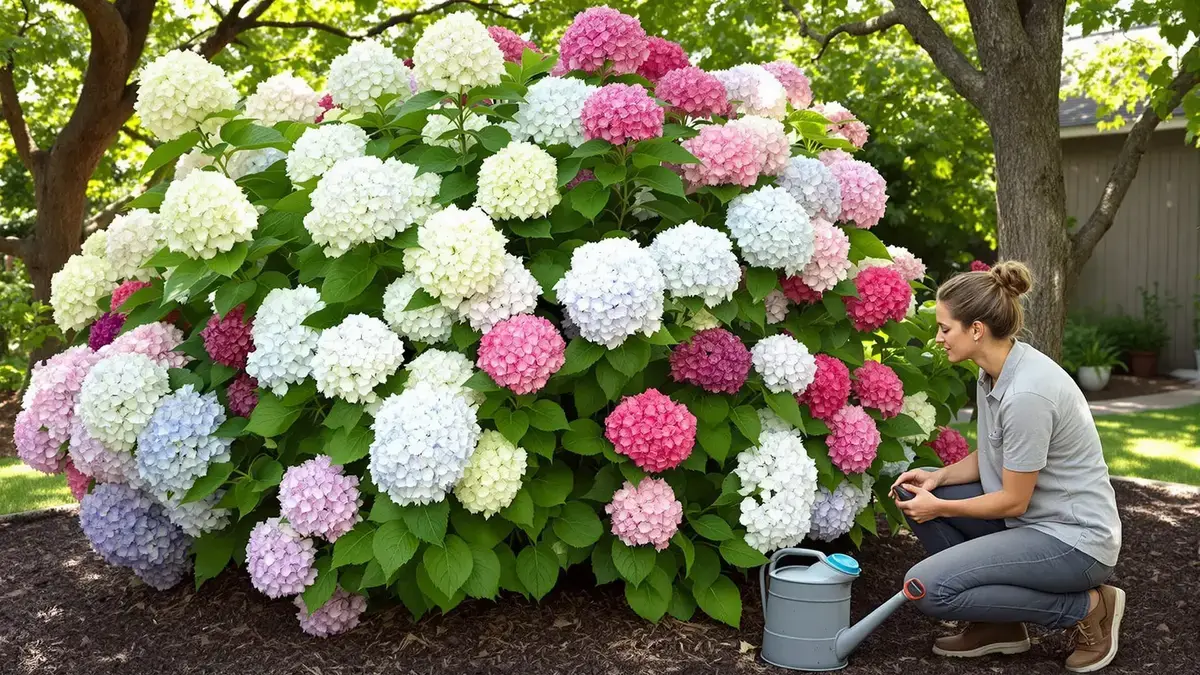

On a quiet afternoon, a lone hydrangea stands at the corner of an ordinary garden. Its mass of blossoms seems to catch the shifting sun, colors deepening from white at the edges to a rich pink or red at the core. It's easy to overlook how a single plant can alter the feel of a whole space, changing what was once familiar into something gently, unmistakably vibrant. The effect isn’t immediate—a transformation unfolds in slow, deliberate waves as the season moves on.
A Matter of Scale and Shape
Beneath the shade of a modest tree, hydrangeas settle into the soil with patience. Their shapes are almost architectural, drawing borders or filling beds, blending into the background until bloom time. Then, one variety quietly steps forward: 'Avant-Garde'. Its flowers, broad and rounded, dwarf most of their neighbors. Thirty centimeters across, sometimes more. Each cluster forms a soft dome, made up of bicolored petals shimmering between white and ruby, or sometimes a gentle pink.
Space matters, but 'Avant-Garde' doesn’t demand much. Its stature is commanding yet controlled, reaching up to about one and a half meters. The real spectacle is in the texture—tight, plush petals on thick stems, suggesting weight but moving lightly when the breeze shivers through. It's a plant that claims its spot without dominating everything around it.
How Soil Shapes Color
Gardeners tend to hover near hydrangeas, less out of fuss and more out of curiosity. Color is at stake. The secret sits underground: soil pH steers the direction of the flowers. A backyard shaded with beeches and brambles might yield the purest blue. Switch to earth that’s limy or neutral, and a flush of pink appears. Owners grow particular about their compost piles and hoses, knowing this subtle chemistry is what gives 'Avant-Garde' its full spectrum.
Partial shade is its friend. The blooms last—from June into September, undeterred by midday light, provided they aren’t left to bake. Regular watering and a layer of mulch keep the roots cool; in summer’s heat, it matters more than most believe. Winter asks for a little care, too: a mild prune, mostly old wood, brews a denser show for the next year.
The Quiet Power of the Small
Farther along, in a narrow side patch or a city courtyard, hydrangeas can shrink. Hydrangea serrata, with its necklace of tiny, lacy petals, barely whispers. Blue one year, blush-pink the next, the flowers come as much from the mountains of Japan as from the shadows of French gardens. These small blooms have their way—subtle, almost tender in their restraint.
Then there’s the Hydrangea paniculata ‘Bobo’. Its heads are neat, nothing extravagant, but in a small border or pot, they persist. These compact forms handle change in weather with some resilience, often lasting into autumn when most other flowers bow out. They offer endurance, if not spectacle, and give gardeners choices—height for grandeur, delicacy for calm.
Transforming the Everyday
Some plants muscle quietly into the memory of a place. Hydrangeas, in all their forms, do just that. The right variety can roll a color down a terrace or spill softness beneath a hedge. With ‘Avant-Garde’, a corner of the garden becomes a stage, the blooms drawing eyes even from a distance. Where nothing seemed remarkable, something begins to hold attention—a slow, persuasive drama of scale and shade.
There’s no need for grand gestures. With steady care and a little watchfulness, these plants take up their task—shifting the ordinary toward something showier. Year after year, the ritual repeats.
A garden lives on these changes. With plants like ‘Avant-Garde’ at its heart, the transformation feels both inevitable and surprising. It’s a reminder: sometimes, it’s a single forgotten shrub that carries the whole season forward.
