
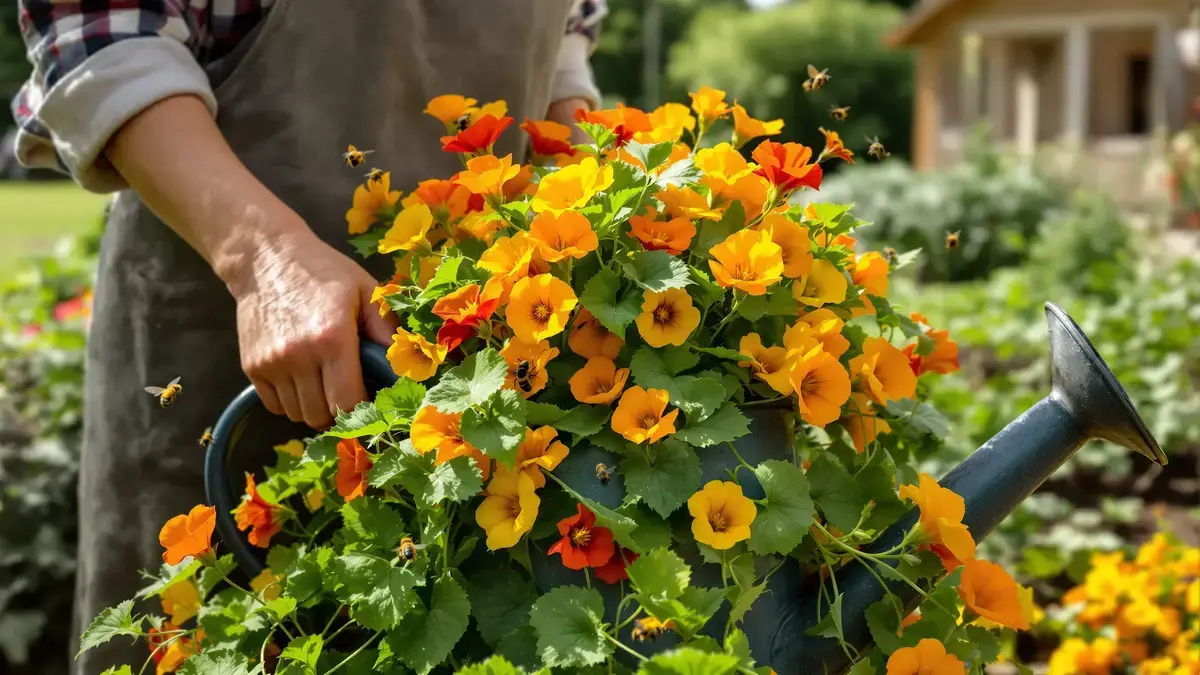

In the early light, a cascade of orange and yellow blooms spills over the edge of an old watering can in the garden. Dew clings to the rounded leaves, blurring the outline of each petal. There is something both wild and deliberate about the way these flowers take hold, weaving between rows of tomatoes and spilling into patches of mint. Every spring, this scene repeats—riotous color and quiet purpose side by side—inviting a closer look at the overlooked power of a simple flower.
Sunlight and Shadows on Fleshy Leaves
Close to the garden shed, the nasturtium sprawls in both directions. Some tendrils climb the sagging fence, while the compact varieties press low against the soil. Their bright blooms shift with the breeze, flashes of yellow, orange, and red against patches of last year’s grass. The leaves, round and cool under the fingertips, have a substance to them—never quite delicate.
They thrive in surprising places. Where the ground is poorest and the sun hottest, nasturtiums unfurl the most flowers. Extra fertilizer only brings more leaves, hiding the color in a secret green tangle. Warm afternoons see the garden humming with life: bees hunched in the big open throats, butterflies pausing, hoverflies darting amid the blooms. The air is quick with possibility.
A Sentry in the Vegetable Rows
Some flowers are planted for show, others for what they do. The nasturtium, with its sprawling energy, keeps its own watch over cabbages and beans. Aphids gather on its stalks, forsaking the precious tomatoes just a foot away. Whiteflies and flea beetles cluster on these leaves first, drawn by scent or by the accidental architecture of the plant.
Yet it is more than a simple trap. Aromatic oils on the leaf surface seem to give pause to wandering ants and carrot flies, breaking their rhythm as they edge along the border of the beds. With every season, this border grows—a line both ornamental and quietly protective, thriving where little else would.
Bite and Spice at the Table
In the kitchen, a handful of nasturtium flowers is set aside as a garnish. Their softness breaks the green monotony of a salad, the golden and scarlet petals carrying a sweetness followed by a crackling, peppery bite. Younger leaves, rinsed and still cool from the garden, are torn for sauces or stirred into butter until the flavor is almost like watercress. Older leaves, rougher on the tongue, need only the smallest pinch.
Further in the year, clusters of immature green seeds are picked, almost hidden beneath the foliage. Steeped in vinegar and salt, they become sharp and briny—the so-called “poor man’s capers”—brought out for fish or tossed onto roasted vegetables. This edible bounty is fleeting, best gathered during the soft, slanting hours of the morning.
Color Beyond the Plate
Nasturtium does not just feed; it nourishes in other ways. Its leaves boast vitamin C enough to rival citrus, and a handful of trace minerals. Home herbalists have long brewed the flowers into tea, pressed tinctures, and—on rare occasions—applied mashed leaves to scrapes, drawing on old ideas of antiseptics and expectorants. For most, though, it is the daily act of picking and tasting, the act of watching the plant remake itself from spring to frost, that forms the heart of its appeal.
Simple Acts, Lasting Returns
Each spring, seeds pressed into soil wake without hesitation. There is little need to fuss—just water now and then, a trim if the tangle gets too wild, maybe a staggered sowing for flowers that last. Dwarf kinds fit easily on balconies, climbing sorts find threads to wrap around fence wire. Even harvested, nasturtium endures a little while longer in the fridge, or frozen in blocks of ice that melt into drinks at summer’s height.
Practical, reliable, whimsical—nasturtium sits at the intersection of beauty and utility. Gardens richer in color are also richer in life: pollinators stay longer, pests lose their grip, and the meal at day’s end is brighter for the effort.
In the end, as the first frost whispers across the tangled beds, memory lingers in the garden—sun-warmed petals, stained fingertips, and the quiet promise of seeds dropped silently for another spring. There is nothing simple, really, about the flower that manages to feed both the eye and the earth beneath.
