
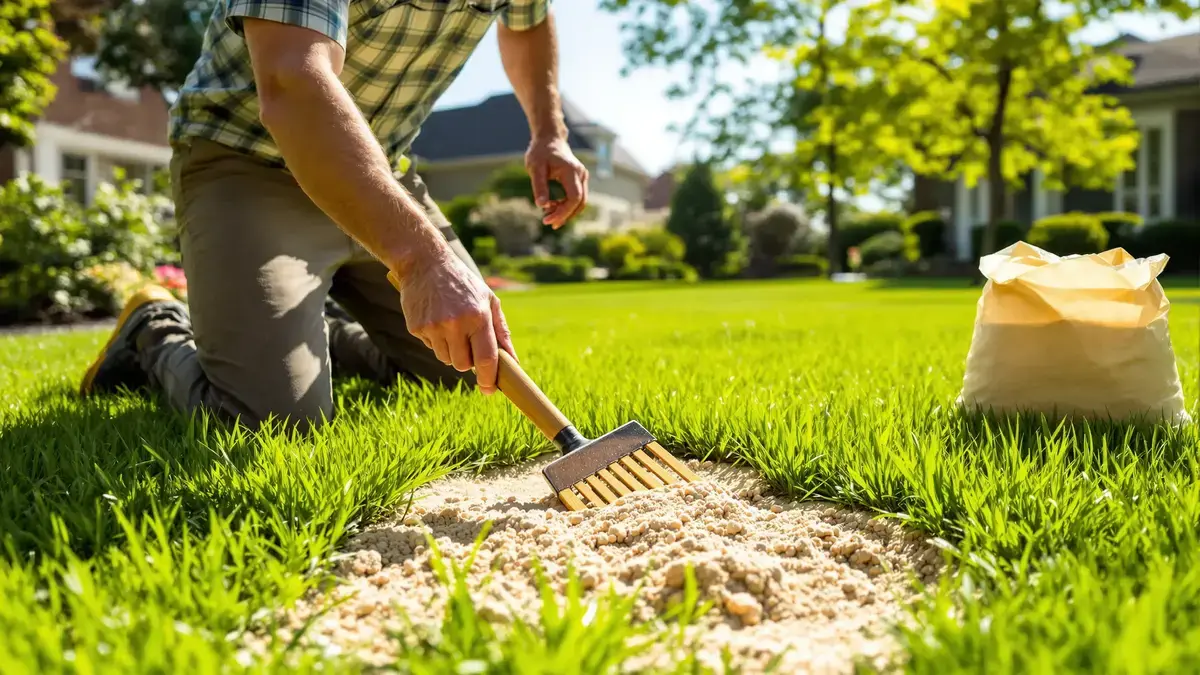

On a bright afternoon, the rhythmic sound of a rake moves across a patchy lawn, shifting grains of sand into the grass. Sunlight glints off the pale surface, not just highlighting bare patches but hinting at subtle promise beneath. What begins as a simple, timeworn gesture—scattering sand by hand—often escapes notice, even among seasoned gardeners. Yet, in recent years, this overlooked ritual has quietly reshaped how many people pursue the elusive dream of perfect turf.
Tending to More Than Surface Green
Someone bends low beside a dense green expanse, trailing fingers through grass that stands even and thick. Where lawns once struggled with muddy patches or stubborn bare spots, there’s a new springiness to the step. It isn’t just more mowing or a change of fertiliser that brought this about. In homes and parks alike, an unexpected ally is taking root: sand.
Often tucked in garden sheds, sand was rarely considered central to lawn care. But those who bring it into their yearly practice notice remarkable transformations—lawns not only greener but stronger beneath the surface, their roots breathing deep. Traditional care leaves some issues unresolved. Rain pools after storms. Grass struggles to knit together across uneven ground. In these places, sand works quietly: it slips below the turf, softening hard earth, and opens the soil to air and water.
The Subtle Power in Each Shovelful
A thin layer of fine, non-calcareous sand, applied at the right moment, can be a turning point. The core trick is timing. Most wait for a day in late spring or early autumn, when the grass surges with new growth. Others take the opportunity right after aerating, using tined forks or scarifiers to break up soil crusts.
Spreading sand then, rather than during wetter spells, ensures it filters evenly, filling dips and smoothing bumps. There’s a soft hush when a rake follows, working the grains gently downward so they don’t cluster on the surface. The visual difference comes slowly at first, but regulars say it soon becomes clear: the earth loosens, water no longer lingers, and roots grow deep rather than wide in search of air.
For those with heavy, clay-rich soil, the effect can border on transformative. Compacted lawns, previously dense and unyielding, begin to rebound. It isn’t a miracle, but a gradual shift. Year after year, the roots thicken. Fungal troubles recede as puddles vanish. Instead of muddy shoes and patchwork green, a resilient, consistent turf emerges.
Choosing What Disappears Into the Ground
Not all sand is created equal. The trusted choice is river sand, its medium grains offering just enough substance without overwhelming delicate shoots. Fine beach sand is tempting, but too saline for most gardens; lime-based varieties risk tipping the soil balance, so they’re passed over in favor of something more neutral.
Sometimes, gardeners blend sand with compost to deepen its effect, thickening the texture of the soil below and providing a steady flux of nutrients. Professionals echo this sentiment, reporting how sand—applied once or perhaps twice a year—lets lawns rival golf courses in appearance, yet remain robust enough for daily family life.
The annoyance of surface puddles after rain slowly fades. Each application, while brief, lingers through the seasons. Grass recovers more quickly from drought, and thick blades cushion bare feet when summer comes again.
A Simple Ingredient, A Lasting Change
Sand has quietly earned its place as an ally, its impact noticed most in what doesn’t happen: no more lingering wet after a storm, far fewer patchy spots. The humble process asks for little, just attentive distribution and patience. Both experienced landscapers and keen amateurs find themselves returning to this method not because it promises miracles, but because the results accumulate with time and care.
In the subtle balance between water, earth, and light, it is often the overlooked gestures—like pressing sand into hungry soil—that leave the most visible trace months on. What was once a patchwork is remade, dense and lively, reminding us that sometimes the simplest improvements come from adjusting what lies just beneath our feet.
