
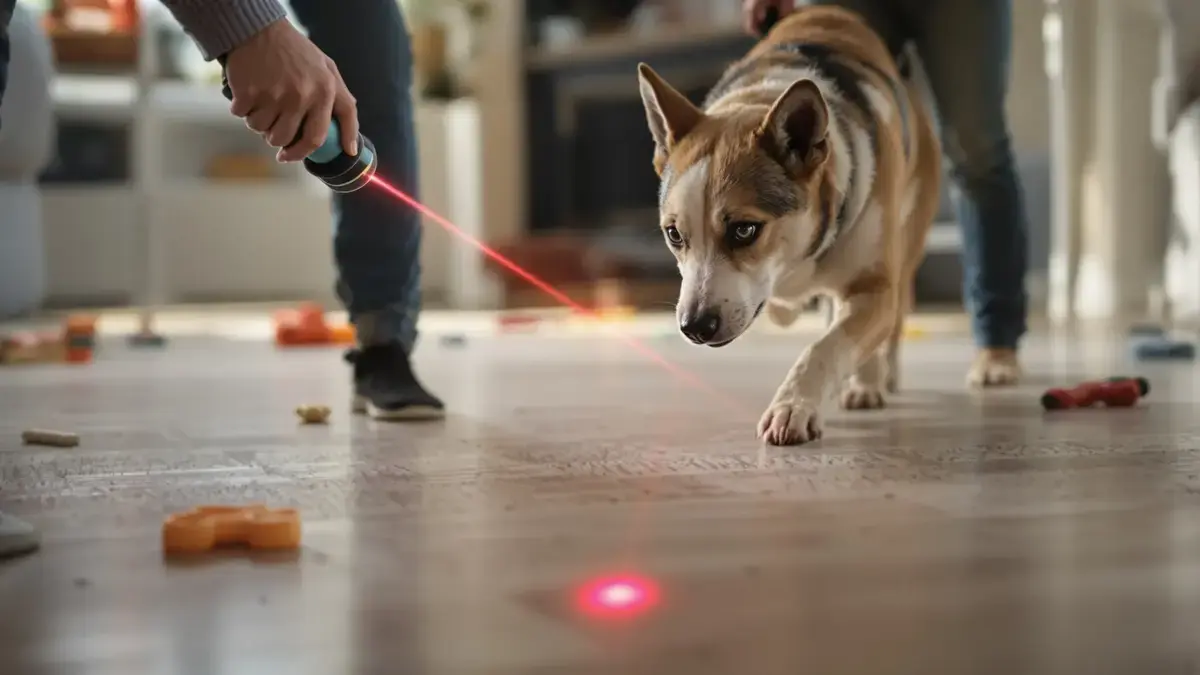

Laser pointers are a common source of amusement for pet owners, promising fast-paced fun for dogs captivated by the elusive red dot. Yet behind this popular pastime lies a concerning reality: laser pointer play may trigger deep-seated behavioral problems in dogs. Understanding how this seemingly harmless game impacts canine psychology reveals why experts now advise against its use.
The Science Behind the Chase
Dogs are biologically programmed with a strong predatory instinct. When a laser pointer darts across the floor, it closely resembles the erratic movements of prey. This visual stimulus instantly activates the dog’s instinctive “hunt mode”—pupils dilate, muscles tense, and every sense zeros in on the moving target. It is not simple entertainment: it is a deep-rooted genetic response, compelling dogs to chase after what flees from them.
A Game with No Resolution
While traditional toys offer dogs the chance to spot, chase, and ultimately capture an object, the laser dot represents a “ghost prey.” Dogs engage in the initial predatory phases—spotting and chasing—but the sequence breaks down before the final act: the capture. Without ever feeling the satisfaction of catching their target, dogs are left unsettled. Each failed attempt leaves their brains flushed with dopamine—the chemical of excitement—while the calming sense of accomplishment never arrives. This absence of closure is more than disappointing; it disrupts the dog’s emotional balance.
Frustration and Behavioral Risks
After repeated exposure to this endless “game,” dogs often develop signs of stress and agitation. The body’s demand for closure remains unmet, and tension lingers long after the laser pointer is put away. Over time, this frustration can give rise to compulsive disorders. Dogs may begin obsessing over lights and shadows—staring, pawing, or chasing reflections throughout the day. These are not playful antics but markers of increasing anxiety and hypervigilance, accompanied by an inability to relax. Once compulsive patterns take hold, they are remarkably difficult to reverse, leading to chronic psychological distress.
The Importance of Tangible Play
In contrast, using physical toys—like balls, ropes, or frisbees—allows the dog’s natural predatory cycle to complete. Here, dogs chase, catch, and chew, experiencing satisfaction and relief at each stage. Completing this behavioral loop is essential for their emotional well-being, fostering relaxation and confidence rather than frustration and tension. Physical toys provide feedback, closure, and, most importantly, support a healthy relationship between dogs and their environment.
Conclusion
Laser pointer play, beneath its surface excitement, disrupts basic canine instincts and can have lasting negative impacts on mental health. Providing dogs with opportunities to act out and resolve their hunting drives with tangible toys is far more beneficial, supporting both behavioral stability and contentment.
