
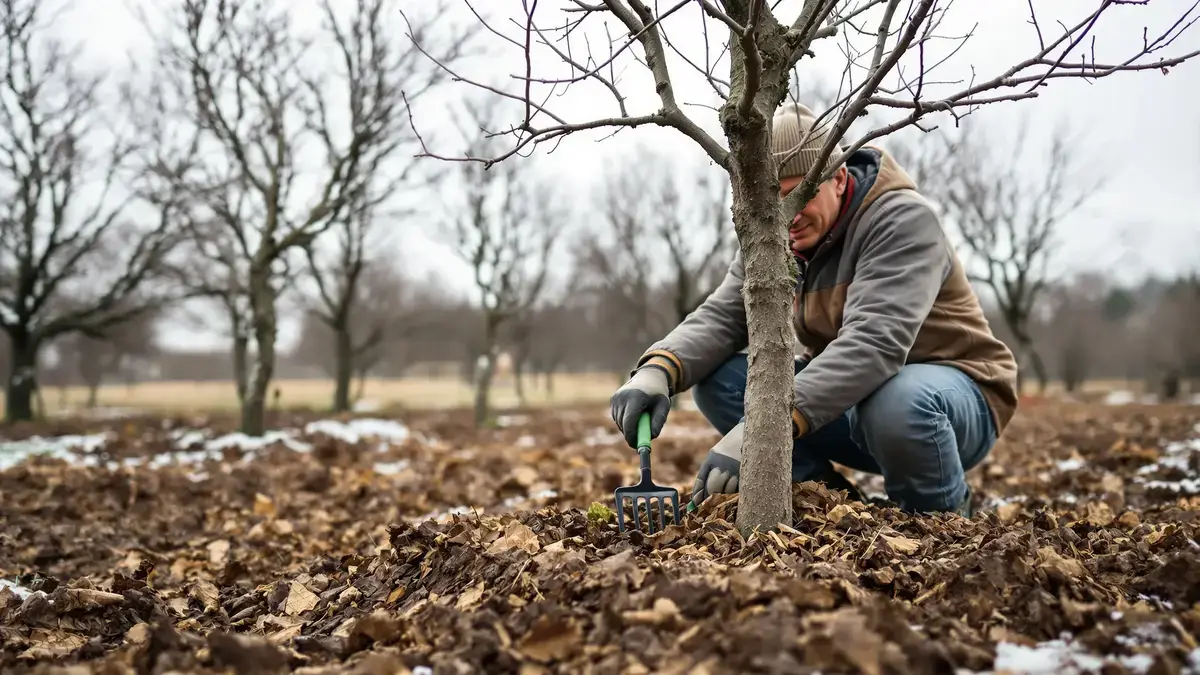

On a quiet winter morning, the garden rests beneath a gray sky. The bare fruit trees stretch silent limbs over the earth, their forms motionless, almost statuesque. To the eye, it may look like the world is on pause. Yet there’s a careful choreography unfolding beneath the frost-hardened crust—a lingering question for anyone who’s tempted to put off tending until spring shows its face.
Under the Surface: Winter’s Quiet Work
Kneeling at the edge of the orchard, gloved hands sense a faint give in the soil. Even in the heart of January, that softened top layer hints at something alive and persistent. Beneath the roots, soil microbes are patient and methodical, slowly breaking down last season’s remains and any organic matter left for them.
This is the hidden rhythm of the cold months: fruit trees seeming asleep, yet unconsciously preparing for a surge of growth. The illusion of stillness above belies a crucial truth below.
The Timing of Anticipation
Winter invites inertia, but successful growers know the next harvest depends on what happens now. Organic amendment—a layer of mature compost, rotted manure, or balanced organic blend—is not a quick fix. The nutrients it contains take weeks, sometimes months, to become accessible to roots through a process of mineralization. It is a slow, almost invisible transmission: winter action for spring reward.
Placing these natural ingredients in January ensures a well-stocked pantry for the moment buds break. Waiting until flower petals open is usually too late. By then, the essential elements have missed their opportunity to travel from soil to sap, and the tree may struggle to meet the demands of fruiting.
Gentle Hands, Measured Steps
There’s no need for strenuous digging. The task is best handled with a gentle fork or claw—just enough to roughen the top 3 or 4 centimeters. The intention: aeration, not upheaval, so that delicate feeder roots remain safe and the microbial work can proceed untroubled.
Placement is as important as timing. The amendments belong not near the trunk, but beneath the outermost reaches of the branches—sometimes called the drip line—where young, hungry roots stretch out for sustenance. For each tree, dosage depends on its age and vigor. Older specimens can take a hearty application, while the young need restraint and extra care.
A thin cover of mulch afterward helps hold in moisture and keeps soil communities thriving. In heavy, clay-rich ground, organic matter brings the added advantage of loosening the earth, creating pathways for roots and rain alike.
Common Missteps and Lasting Consequences
It’s tempting to reach for a bag of bright chemical fertilizer in winter. But these fast-acting fixes rarely help at this time of year. Rain washes nutrients away before trees can use them, sending valuable compounds into waterways instead.
Burying amendments deep, or piling them against the trunk, causes more harm than good. Roots need oxygen, and suffocated soil can breed disease. Feeding the tree directly invites disaster, while feeding the soil means fostering a system that gives back steadily.
Patience, Preparation, and the Quiet Return
For those drawn to gardening, it is the cycle of anticipation and patience that endures. January’s small, deliberate effort—hands cold, sunlight brief—becomes a silent promise. The soil, quietly stocked and gently stirred, feeds the waking tree when spring arrives.
That discipline, more than luck or impulse, shapes the basketfuls of fruit to come. When harvest fills the air with sweetness months later, it is a quiet testimony to what went unseen—an investment, a habit, a simple trust in time’s slow working. Those who skip this step, enticed by apparent dormancy or distracted by winter’s stillness, often look back with regret, finding that nature’s calendar can rarely be rushed.
