
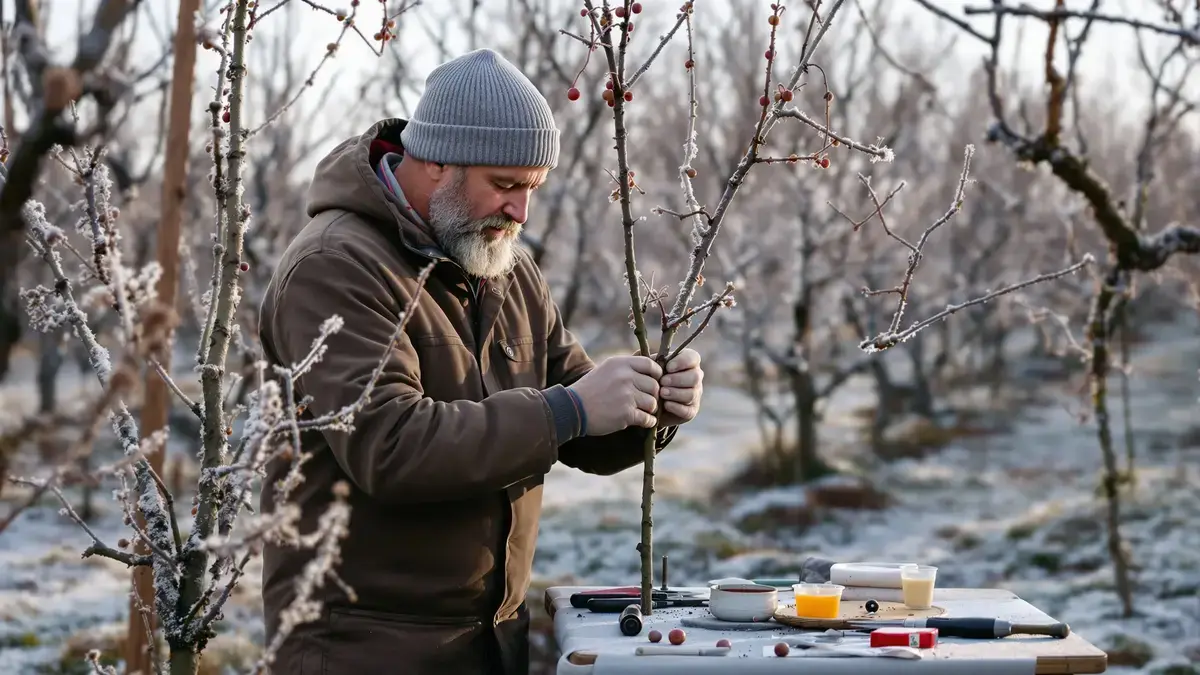

Frost clings to bare branches, the orchard feels silent, and tools rest in the shed. Yet, beneath the still surface of winter, decisions are quietly shaping the next season’s harvest. Timing, especially now, matters more than most realize; an overlooked winter window can leave fruit trees stunted, their rewards diminished, and future regrets close by.
Why Winter Grafting Changes Everything
During deep winter, fruit trees enter a period of true dormancy. The sap slows, growth pauses, and the garden appears at rest. But this calm is misleading. For those who graft, this is when the future harvest is decided.
Grafting joins two very distinct worlds: the rootstock, with its hardworking roots and disease resistance, and the scion, a slender branch carrying the promise of a chosen fruit. Doing this now, while trees sleep, avoids stress for the plant and ensures the lowest risk to fresh cuts.
The Power of the Right Moment
Trained eyes see opportunity in a cold spell. Wait too early, and the tree is not ready. Too late, and swelling buds signal it's passed. Each fruit tree species has its own sweet spot—apple and pear scions are collected between December and February; stone fruits like cherry and plum need a little more patience, until late winter, right before buds awaken.
Miss this window, and unpredictability creeps in. Trees grown from seed often disappoint: fruit can shrink or become sour, nothing like the original. Grafting, timed well, preserves variety—the right apple or pear, year after year, not just a genetic guess.
Simple Steps, Subtle Results
At first, the process might seem surgical. Select a young, bare-root tree or even an established branch for your rootstock. If roots are bare, let them soak overnight; you’ll sense the weight and flexibility return by morning.
The scion, about as thick as a pencil and lined with swollen buds, is collected deep in dormancy. Using clean, sharp tools, a quick cut and a vertical split open the trunk or branch. The base of the scion is shaped carefully into a wedge: not too broad, not too thin. Fitting scion to rootstock, aligning their cambium layers, feels almost like joining puzzle pieces. Bind, then seal the wound with grafting wax. The rest is patience.
Harvests Shaped by Invisible Lines
Look closely at a mature tree’s trunk—a subtle swelling near the base gives away a successful graft. It’s the tree’s telltale seam, where rootstock and scion quietly merged. The callus forms slowly, strengthening each season, marking the spot where potential turned into promise.
The shape of the tree, its compactness, even how easily you can pick its fruit later, all trace back to this union. Growth below the graft gets removed to ensure the chosen scion dominates. With time, first white blossoms appear, then, with summer warmth, fruit that’s true to its name.
Shaping the Orchard's Future, Now
Winter grafting isn’t just a technical step—it’s a quiet act of anticipation. While frost grips the soil, this hidden work programs what will flourish months later. The scion steers flavor and harvest, rootstock brings strength and adaptability. Together, joined at the right moment, they rewrite the tree’s destiny before the thaw.
