
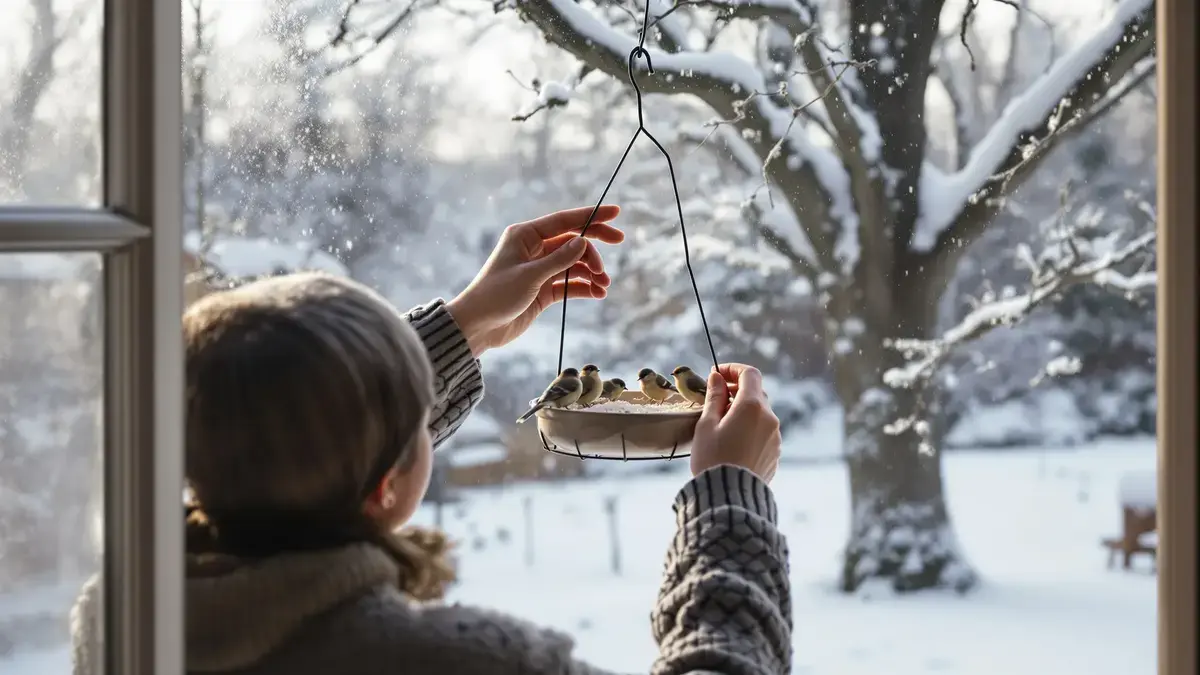

A frosted window catches the first weak rays of morning while the garden rests under a silent layer of snow. In the cold, hidden movements begin—small birds waking, their chests rising against the chill. The next hours will decide whether they find enough energy to survive till dusk. Beyond the glass, a forgotten object can be reshaped into an essential tool for their winter survival.
Every Winter, a Quiet Struggle Unfolds
Nights turn colder, biting through thin branches and the smallest bodies. Birds like sparrows and tits lose up to ten percent of their weight before sunrise. Energy becomes everything. Yet, as frost hardens on lawns and seed heads vanish beneath ice, simple food becomes scarce.
Even in ordinary gardens, there is a battle unseen. Each morning reveals trails in the snow—tiny steps and sweeping prints—evidence of the night’s tireless search for warmth and food.
The Threat Below: Predators and Scarcity
Timing and positioning shape a bird’s chance for survival. Feeders left low on posts or hidden in corners attract more than birdlife. Cats, rats, and sometimes martens learn to hunt such easy places. Quick movement is no guarantee of escape.
Elevating feeders changes the game. Up high, swinging just enough to unsettle predators, food remains safe but welcoming. For the birds, reaching a meal is easier than dodging a lurking threat.
Transforming a Simple Coat Hanger
A sturdy metal coat hanger, its lines bent but unused, hides new potential. Untwisted into a straight rod of about 35 to 40 centimeters, it is remade with strong hooks at each end. The feeder hangs from one curve; the other fastens securely to a branch or support.
Care matters. The metal should be solid, unrusted, and uncoated by peeling paint. Any sharp point or tiny weld is gently filed down, the finished hooks thick enough to hold birds and seed, sturdy against snow or wind. The higher the hanger stands—ideally one and a half to nearly two meters from the ground—the safer the feeding zone.
Some add a thin layer of ash or dry soap near the top, deterring adventurous rodents. Never plastic, never a flimsy wire—only metal that resists cold, weight, and storms.
What and How to Feed Safely
The meal itself determines health. Black sunflower seeds offer dense calories. Specialized seed mixes and soft vegetable suet balls, free from plastic mesh, meet key needs. Chunks of apple, pear, or soaked raisins add quick sugar but avoid anything salty, sugary, or soaked in dairy. Bread, cookies, and milk do more harm than good.
Feeding is vital through persistent cold. With each warming week, the amount is reduced, allowing birds to rely again on wild food. Regular cleaning of the feeder is just as important, removing any mold or spoiled seed that might cause illness.
A Small Action With Wider Meaning
A coat hanger, shaped with care and placed with thought, becomes more than debris from a closet. It becomes an anchor for life, a point from which birds launch into sunrise. In the cold, these decisions—where to hang, what to fill, how to protect—quietly shape the chances of survival.
Observed from inside, safe from the wind, this gesture is easily missed. Yet it ripples through winter mornings, supporting the wild threads that stitch a garden to the living world beyond.
Concluding the Quiet Adaptation
Across silent neighborhoods, these improvised feeders have joined shrubs and water bowls as subtle marks of adaptation. The change remains unremarkable to many, but for birds each detail can mean the difference between a night survived or not. Sometimes, in seasons ruled by cold and scarcity, it is an ordinary tool—reimagined—that quietly sustains life.
