
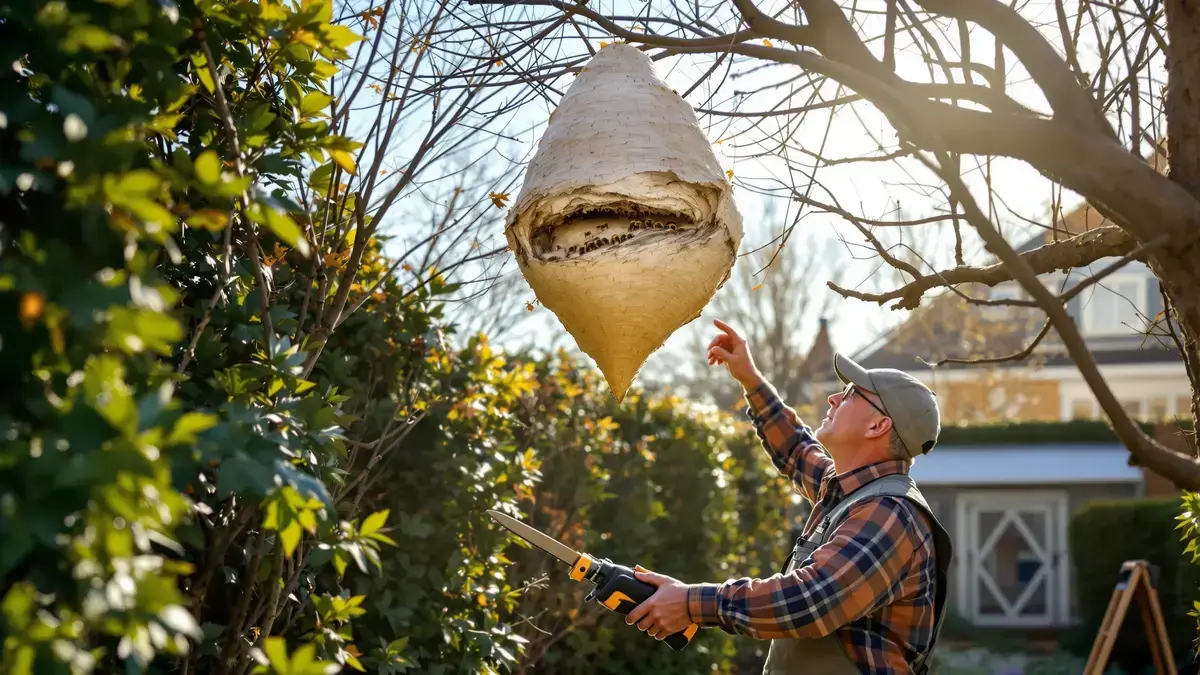

As winter strips trees of their leaves, strange papery shells sometimes come into view above gardens or behind sheds—leftovers from a season few noticed. These unexpected structures mark more than a passing curiosity; they reveal where a silent threat has quietly settled, hidden in places rarely checked. Spotting them now isn’t just a matter of curiosity. It touches on safety, spring routines, and staying ahead of problems that can multiply fast once warmth returns.
What the Cold Reveals
Bare branches and thinned hedges bring old Asian hornet nests out of hiding. Their pale, weathered forms hug trunks or dangle near rooflines, suddenly easy to spot when foliage no longer masks them. In the quieter months, these structures offer clear signs of last year’s activity.
Often, several nests go unnoticed all season, their locations blending with the textures of walls or vegetation. Only as winter sets in does their outline stand out—a gentle warning that the danger isn’t gone, just paused.
Hidden Nesting Zones Beyond Trees
It’s not just high branches that shelter these hornets. In spring, a queen might start her work in the least expected place: inside a roller shutter box, tucked under a veranda, tight into an awning’s corner, or beneath loose panels of roofing. These dome-shaped primary nests, small and made of chewed cellulose, seem almost designed to stay out of sight.
Dry, sheltered areas near homes become prime real estate for hornets waking from hibernation. Missing these early nests means missing a chance to act before colonies expand.
How Mapping Old Nests Helps
Each abandoned nest is more than a relic. It marks a spot where hornet life thrived, and it signals places where future queens may spend the cold months hidden in soil or crevices. By noting these sites in winter, it’s possible to focus preventive actions—like targeted traps—in exactly the right spots when warmer days return.
This focused approach isn’t just theory. It stops the cycle before new colonies take hold, saving effort, and sometimes, reducing accidents before they ever start.
The Dangers of Thick Vegetation
As colonies grow, hornets often shift to building larger secondary nests. It’s not always up in the tree canopy. Dense hedges—thick with growth or near footpaths—make perfect hiding places for these expanding homes. Gardeners may trim a bush, unaware of the stinging colony hidden inside.
A careless disturbance can provoke swift defense. Hornets emerge quickly and target any threat near their nest. Awareness while gardening or pruning in winter and early spring becomes essential for safety.
If Confronted by Hornets
The instinct to wave or run wildly is best resisted. Hornets react fiercely to sudden movement. Instead—shield the face and neck, then back away steadily for at least twenty meters. Heading for water won’t help; hornets can wait overhead.
Medical risks rise with repeated stings. Remove rings promptly in case of swelling, and use local heat to slow the spread of venom. Any shortness of breath or rapid swelling requires quick emergency attention.
Managing the Year Ahead
Winter reveals what warm months concealed. Old hornet nests—often ignored until now—give critical hints about where trouble could return. Keeping an eye on these locations as the days lengthen turns invisible risks visible, making prevention an ordinary part of the season’s quiet work.
