
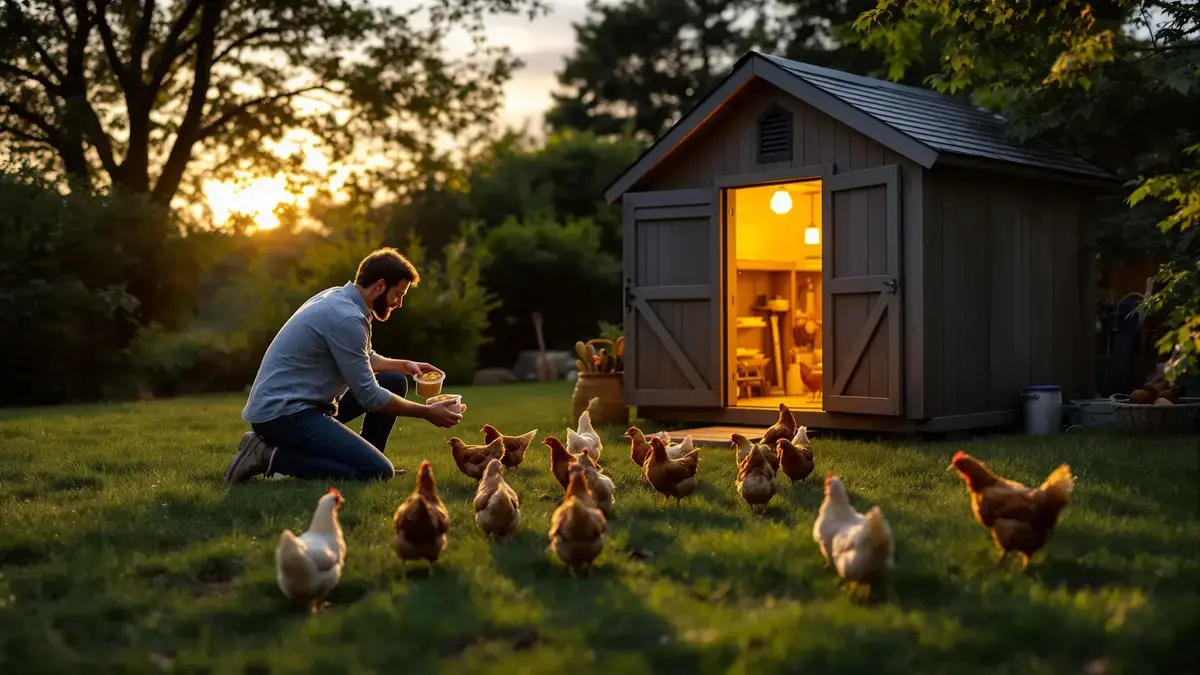

Somewhere between the fading orange of sundown and the first hint of night, a small flock of chickens lingers in the open air, scratching at the cool earth. The coop door waits, silently promising shelter, but the birds aren’t eager to end their day. Every evening seems the same. Yet tonight, their hesitation feels longer, their shapes scattered across the yard in unhurried defiance of routine. Why do they resist? The answer sits quietly in the twilight, half hidden, half familiar.
A Reluctant Return
A chicken’s world spins on predictable rhythms. Sunrise means movement and searching. By late afternoon, their pace slackens. Food comes at certain times, voices call in ways that feel unchanging. But not all things within the yard remain steady.
Sometimes, a change slips in. Maybe the coop feels warmer than usual, stifling after a thick summer day. Or perhaps an unfamiliar sound rattled the roosting box earlier. Even a new scent or the memory of a sudden move to a new place lingers for hours, making the return inside feel less like comfort and more like a risk.
The Clock Inside
Their bodies keep careful track of daylight. Chickens wake with the sun and won’t willingly enter their shelter before dusk, not because they’re stubborn, but because their internal clocks say: “not yet.” Rushing them inside too soon, no matter how persistent the herder, often leads only to scattered birds and frustration.
For chickens, unfamiliarity rattles nerves. The coop isn’t just a shelter; it’s supposed to be home. If that sense of home is broken—by a recent move, by jarring noises, or by an environment that feels unwelcoming—they hesitate. Stress seeps into their movements, slow or chaotic.
Small Solutions, Nightly Patterns
Restoring order is not about force but about rhythm. When new chickens arrive, keeping them inside for a few days helps establish the connection: this is where food is, where the sun comes up, where it is safe. Patterns matter. So does timing. A meal or a familiar call, heard just as dusk falls, acts like a whisper that home is waiting.
Sometimes, bribery works better than insistence. Treats gathered in a known container or grain shaken in a certain way draws hesitant birds near. Even the sound of a friendly voice, the one they recognize from morning feedings, helps set them at ease at the threshold. If all else fails, a gentle sweep with a herding stick—never touching, only guiding—can nudge them in the right direction. But patience always wins more than pressure.
Clean straw, soft bedding, and cool air on a hot evening make the coop a place worth seeking out. When the shelter feels inviting, routine returns with less resistance.
The Quiet Role of Safety
As dusk turns to night, the logic behind these routines becomes clear. Outside, shadows grow longer. Predators—foxes, perhaps—move quietly in the undergrowth, drawn by the scent of a stray bird. For chickens, the coop is a bedroom with walls, doors, a sense of boundaries. Its main promise isn’t just comfort, but safety.
Keeping a steady schedule does more than guarantee fresh eggs in the morning. It reinforces trust, both between flock and keeper, and among the chickens themselves.
Patience in Practice
Not every night unfolds smoothly, but patience has its own gravity. Habit, gently encouraged, carries birds through moments of confusion. Quiet consistency, a treat or a familiar call, a clean place to rest—these are small things, repeated often, that let chickens find their way home as the sky darkens.
In this way, the coop remains more than a wooden box. It’s the closing line in a day’s story—a place marked by routine, comfort and a safety that invites sleep. When chickens linger outside at dusk, they aren’t resisting for the sake of it. They’re listening closely for the return of patterns they’ve learned to trust.
