
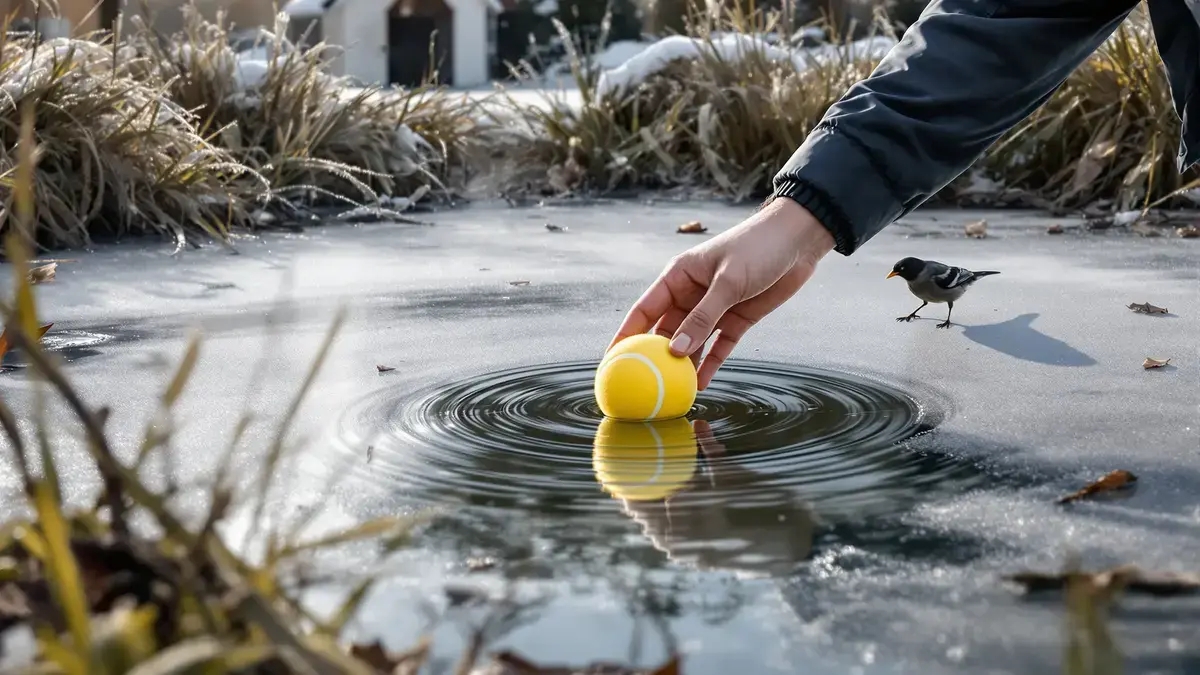

In the quiet stillness of winter, a flash of yellow sometimes breaks the pale morning frost—a tennis ball resting atop a frozen garden pond. It seems curious, occasionally even forgotten. But behind these simple objects lies a subtle intention, one that shapes the daily struggles and quiet victories of life just beneath the cold surface.
Subtle Movements on Cold Water
In the early hours, before footsteps have traced the lawn, the sight of a tennis ball floating on a small pool can catch an observant eye. There is nothing accidental about it. When temperatures fall, water surfaces stiffen, sealing away the crucial access to drink and bathe. That moving ball, nudged gently by the breeze, does more than bob along—it keeps a hole open in the ice, interrupting the freeze long enough for birds and wildlife to survive another cold snap.
A flicker of movement stirs the garden. A blackbird approaches, brave in the hush, pecking at a clear spot left open among the glaze. The surface trembles. In that tremor, there is access—not just water to drink but a place to bathe, to fluff feathers and keep warm. For many garden visitors, this liquid pathway means life.
Simple Actions, Real Consequences
Not much changes in the garden from one day to the next. Yet each small intervention—a ball here; a pile of leaves there—stacks up in meaning. Under a scatter of branches and faded leaves, hedgehogs and field mice find shelter. Even an overturned crate, with a little straw tucked inside, becomes a refuge, holding warmth against the evening frost.
Grass uncut at the lawn’s edge grows thick through autumn, nodding in the chill breeze. Insects gather there, each flower and blade a station in a wider network of wings. There is less mowing these days; blades hold back, letting diversity have its moment. These tumbled green corners build invisible bridges, each day a little safety added for creatures seldom seen.
Winter’s True Challenge
Not every garden shows its secrets. Children run to the pond’s edge, their laughter echoing across the hard surface, finding joy in tracing frozen patterns. But what is cold beauty to us often spells danger for small animals. For a bird, frozen water is an unyielding wall; for a hedgehog, a shelter left in haste can mean a night spent exposed.
Yet, time and again, the choice to act provides relief—a tennis ball breaking the ice, a pile of leaves keeping the cold at bay, wildflowers speckling the raw winter green.
Patterns of Care at Home
These rituals—leaving tennis balls, letting grass grow long, building hideaways from scraps—are quiet declarations of respect for more than just a backyard. They connect the rhythm of our days with the lifelines of wintering wildlife. Offerings not for display, but for unseen guests.
Even on the harshest mornings, the garden breathes a little easier. Each object placed, every uncut patch, becomes part of a gentle resistance to the difficulties of the season. In winter, it is the ordinary things—a child’s ball, the cover of dry leaves, the stillness before sunrise—that quietly support a fragile web of life.
In these gestures, winter gardens become more than background. They are living places, shaped by those who notice, who care, and who see that even the smallest act can extend a chance of survival.
