
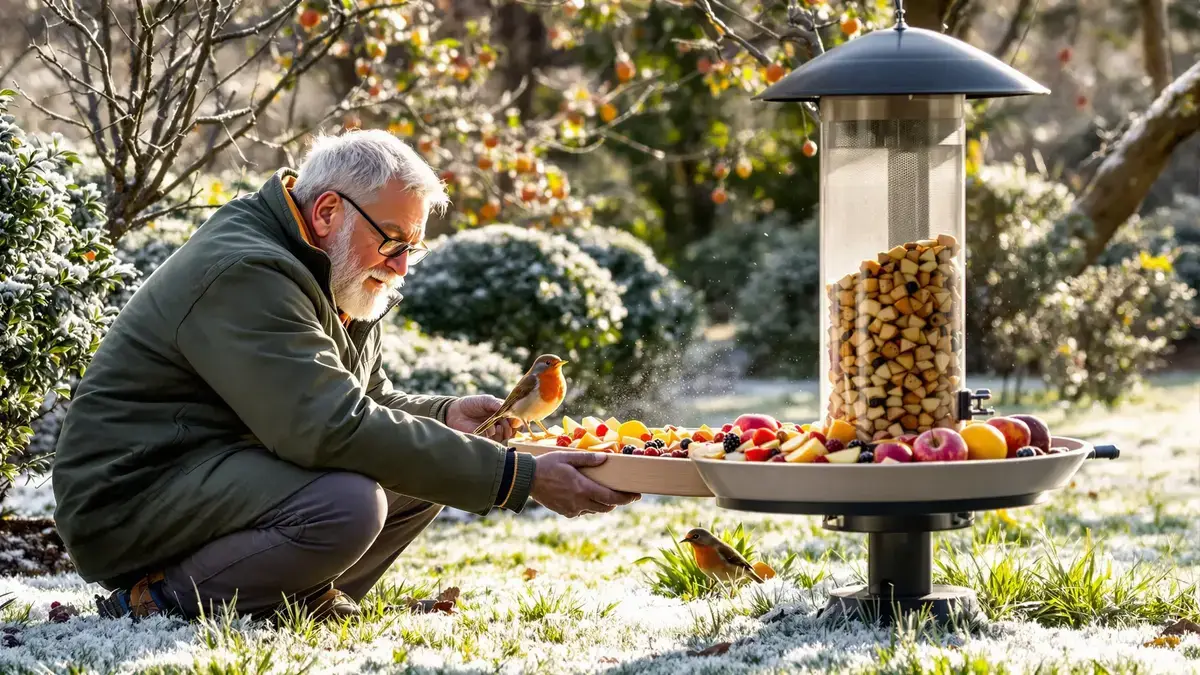

In the hushed stillness of a winter morning, a single robin hops across a frost-bitten lawn, its scarlet chest catching the pale sunlight. Nearby, someone kneels to scatter chopped fruit beneath an old apple tree, intent on drawing more red-breasted visitors. The scene feels gentle, even hopeful—but behind the quiet ritual, well-intentioned choices may invite hidden missteps that ripple through the living tapestry of the garden.
A Winter Visitor’s Hunger
It is easy to picture the robin as a confident regular, tracing paths along the beds, peering into crannies for some overlooked morsel. When cold weather descends, their appetites do not simply grow; they surge. Down below freezing, a robin needs up to a third more food than on a mild day, and their usual diet—beetles, worms, spiders—shrinks as the soil hardens, insects vanish, and life tucks in for the season.
Gardeners, hoping to help, often turn to fruit—an act that binds together care and risk. Feeders piled high with chopped apples or clusters of berries seem a promise of safety. Yet the minor details—what fruit, where, and how it’s offered—mean more than they first appear.
The Hidden Dangers of Good Intentions
A tray placed low and close to thick undergrowth can turn sanctuary into trap. Cats, patient and silent, need only a moment’s edge. Even a single overlooked branch bridging the gap may offer predators access. An open table, perched high and set in the open, changes the odds: the robin sees trouble approach and can dart away.
Smooth, natural materials underfoot, drainage holes bored through wood, and a free view of the sky—all details in a setup designed as much for caution as comfort. Against the blue of a cold morning, the absence of citrus slices is deliberate: too acidic for a robin’s system, despite bright color or the fruit bowl’s promise.
Choosing Fruit Wisely
Not every winter fruit belongs in the tray. Rowan berries bring a punch of vitamin C, their color lingering long after frost browns the leaves. Hawthorn’s small red jewels provide slow-burning energy deep into February. Holly, with its fat-rich berries, acts almost like insulation, elderberries impart antioxidants, and rosehips—a flush of orange-red—furnish vital oils.
The practicalities stack up. Apples, sliced into pieces, and pears help when insects are scarce. But offering the right fruit is only part of the test. If food is left too long, if trays are not scrubbed and dried, disease finds a foothold. Even the rhythm of the feeding—the returns to check, to clean, to shift the table’s spot—becomes a silent choreography for balance.
Safety Through Subtle Tactics
Defenses against predators require a gardener’s patience. A smooth plastic collar on a feeder pole may confound a cat. Thorned shrubs planted around the base add another layer, motion-triggered sprayers another deterrent. If raptors circle silently overhead or crows gather in hopeful numbers, a mesh canopy stretched above the tray—loose, with gaps just beyond a robin’s wingspan—lets small birds eat in relative peace.
Where food attracts crowds, observation brings understanding. The rhythm of visits changes with the wind and cloud. A table may draw eight robins one week, twenty other songbirds the next, a shift triggered by frost or even the time of day. Each minor change in routine—new fruit, fresh shelter, a tray set just beyond yesterday’s reach—alters the tapestry.
Weaving a Living Balance
With vigilance comes reward beyond the robin’s flash of red on white snow. More insect-eaters appear: wrens, blue-tufted titmice. Early bees and butterflies trace the trails of berries and rosehips, awakening with the sun. Fallen fruit and droppings feed the hidden world below—worms churning, soil breathing, roots reaching deeper. The health of the garden begins to mend itself; fewer pests gnaw at spring leaves, and the songbirds’ chorus thickens.
Records and notes—of what fruit worked, when frost snapped, whose wings flashed through the branches—build slowly into a story. Each winter, fresh adjustments sharpen the approach. Unsalted nuts on a bitter morning, dried fruit when ice glazes every twig, more frequent checks whenever the temperature falls.
A Season of Gentle Vigilance
Assisting robins in winter is an act marked by both generosity and precision. It asks for thoughtful choices: the right fruit, a safe station, steady but subtle changes that sidestep harm while opening the door to life. Long after the snow melts and the berries are gone, memories linger—a quiet confidence in the way careful action, rooted in close watching, can draw both beauty and balance to a patch of earth just outside the window.
