
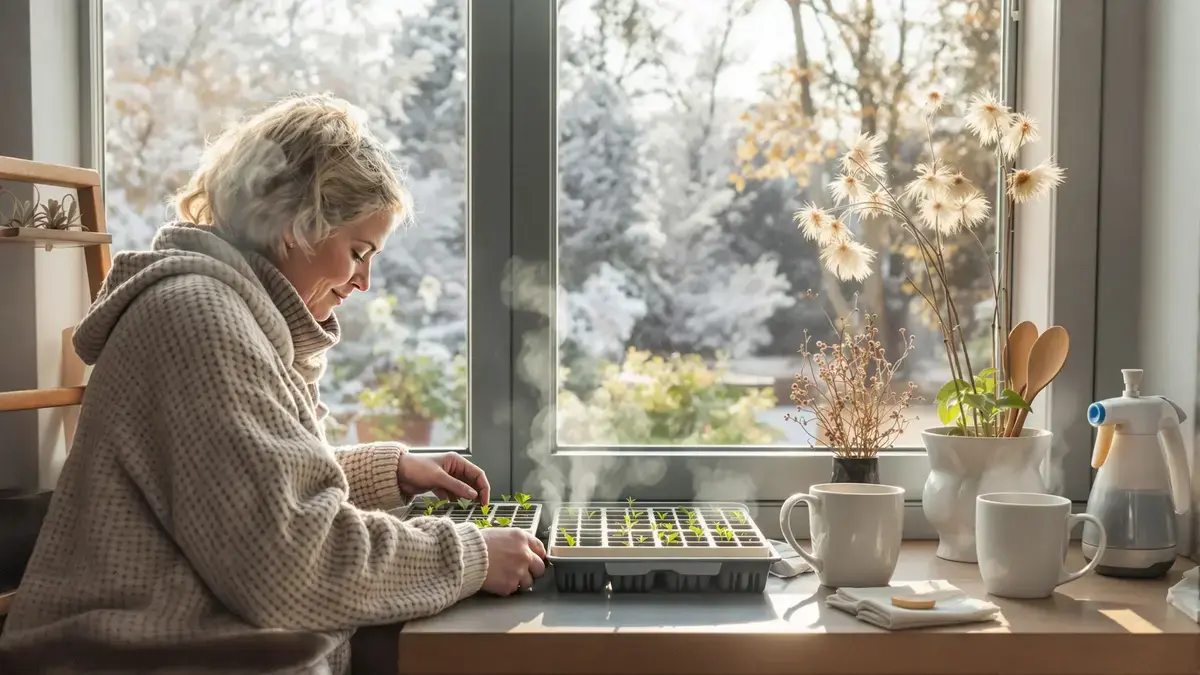

Frost presses against the windows, clinging to empty backyards and flowerbeds, waiting. Indoors, under soft kitchen lights, a small tray of soil sits quietly on the sill, nearly invisible amid mugs and morning routines. Many pass by, assuming that the deep chill means gardening is months away. But in this patient, humble corner, something far more ambitious might already be unfolding—one decision shaping the harvests of an entire year.
Under the Surface, Weeks Ahead
In living rooms and home offices, pots and seed trays become silent promises amidst the stillness of late winter. Those who start now move quietly ahead. It's not the seasonal warmth that gives them the edge, but anticipation—knowing that the most productive gardens often begin their journey before winter has truly yielded.
Waiting until bright spring days can seem sensible. Yet, when April finally arrives, it brings a rush, a scramble for supplies, missed varieties, and sometimes, a sense of resignation as some seeds are already too late to sow. February is quieter. Time stretches. Work is gentle, never frantic—giving seeds the calm they need to settle in.
The Technical Secret: Early Sowing Indoors
In homes, seeds are nudged into starter trays filled with fine, airy substrate. A radiator quietly warms the air nearby—but never touches their roots. Tomatoes, peppers, eggplants, and chilies—plants that long for sun—find their summer in a patch of heated air and a humid dome. Twenty to twenty-five degrees Celsius is the goal: warm, but not stifling.
Tomato shoots in February become sturdy, blue-green adolescents by May. Peppers and eggplants, so slow to waken, are transformed, unhurried but ready for early flowering outdoors. Sowing now multiplies options: a gardener might try onion seeds for the first time, or kohlrabi, or an array of salad greens that brave cool nights after sprouting.
Work That Builds, Not Burdens
Early action drifts into many months. Instead of the May rush, February's work moves at a careful, almost meditative pace—trays checked each morning, misted softly with rainwater collected and settled to room temperature. Schedules never feel frantic. There is time to plan variety, to reconsider spacing, to watch life emerge against the last dark mornings of winter.
Lighting carries its own challenges. This isn't the season for shortcuts. South-facing windows stretch the day for seedlings that might otherwise become pale and spindly, reaching vainly for distant sun. Some growers supplement with simple grow lights, treating their trays to long, steady hours even as frost persists outside.
Healthier Harvests, Hidden Rewards
Seedlings grown at home toughen themselves slowly. Their roots stretch and knit through soft substrate, unhurried by intensive outdoor swings in temperature. These plants are less likely to fall to common diseases—they are used to small stresses, brief droughts, brief chills, long shadows. When the ground finally thaws and rivals rush to buy starter plants, the early sower has strong, adaptable seedlings ready to thrive.
The psychological shift is real. Watching green threads emerge in February, when the world is still at rest, bridges a gap between indoors and out—a sense of participation in the slow turning of the seasons.
The Quiet Month That Makes the Difference
Missing February is missing half the story. The simplest materials—trays, a bag of quality seed mix, a window, a handful of chosen seeds—yield not just earlier tomatoes or unusual onions, but a harvest that feels earned from the roots up. The window for action is brief, but the rewards multiply: diversity, robustness, and a continuous, abundant yield.
Yield in a garden is never owed, but shaped day by day. Those who observe February not as a dormant month, but as the true start, discover that the small steps taken now echo across the entire season—both in what fills the kitchen and in the quiet satisfactions found long before the rest of the world has begun.
