
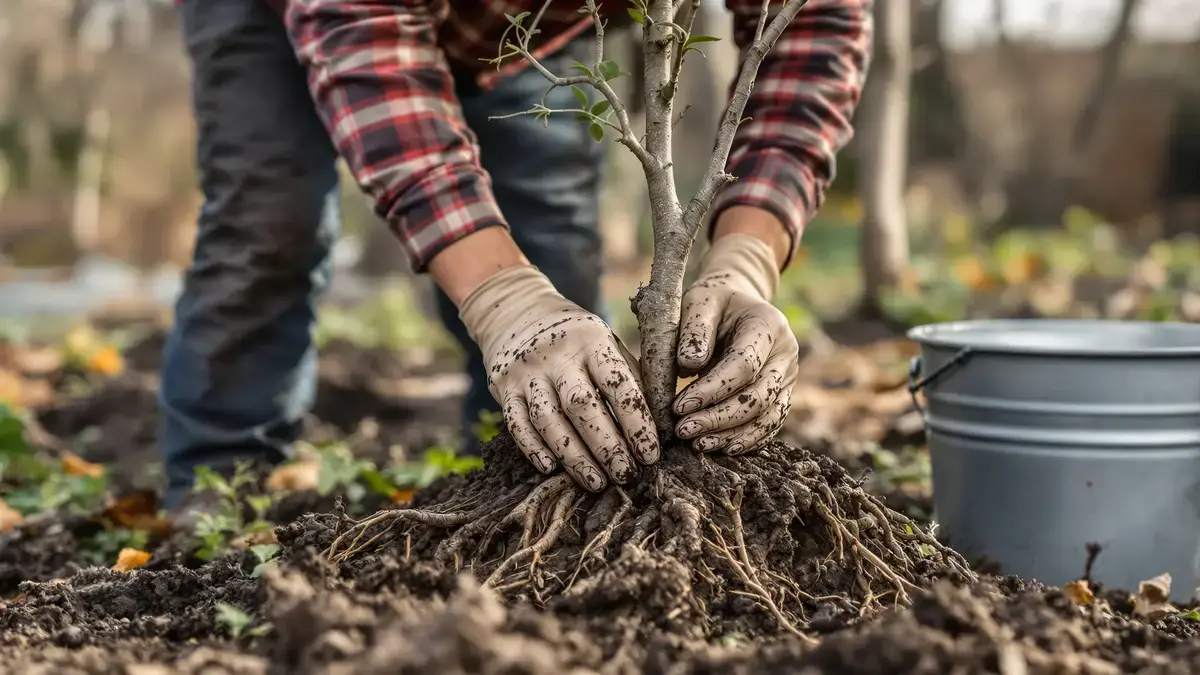

In gardens across the country, hands reach for spades as the earth settles into its winter hush. Bare-root trees line up by garden fences, their roots exposed to the brisk air. Before these roots slip beneath the soil, a hidden step can make the difference between a thriving sapling and a struggle for survival. The secret lies in an old, practical ritual that many overlook, yet its benefits are hard to miss.
The Roots’ Unlikely Armor
As winter descends, tree roots become vulnerable. Chilled wind and dry air can quickly rob them of moisture, leaving them brittle and exposed. It’s here that pralinage comes into play—a thoughtful preparation for the roots before planting.
This technique wraps each root in a gentle mixture. Imagine dipping delicate strands into a cool, muddy bath. The effect is immediate: roots are cocooned, shielded from harsh elements during those first crucial days underground.
The Mixture: Time-Tested and Simple
The heart of pralinage lies in its ingredients. Only three are needed: clay, manure (cow or horse), and water. Clay, with its smooth texture, acts as both healing balm and adhesive. Manure introduces organic nutrients, setting the stage for new growth.
Attention to detail is essential. Fresh horse manure releases intense heat. If used too soon, this "hot fire" can harm fragile root fibers. Allowing it to rest and cool is key, and even then, it accounts for just a tenth of the total mix. Cow manure is gentler and can be incorporated immediately, blending effortlessly with clay and water to form a sticky, protective paste.
How Pralinage Supports Roots
Once the mixture forms, roots are dipped or gently coated, ensuring full coverage. The sensation is subtle—slippery, earthy, slightly cool. In this state, roots are shielded from winter’s drying grip.
Pralinage isn't just about preventing drying. Clay encourages the growth of fine root hairs, essential for efficiently drawing in nutrients and moisture. The manure acts as a slow-release, natural fertilizer, bypassing any need for chemical additives. In effect, pralinage is a bridge between time-honored wisdom and modern sustainable gardening.
Why This Step Matters
On the surface, pralinage is a humble, almost invisible task. But garden veterans recognize its quiet influence. Saplings treated this way show better root survival and stronger establishment come spring.
For those planting in winter, pralinage becomes more than a suggestion—it’s a form of root care rooted in tradition. Its simplicity and reliance on nature underline its lasting appeal, offering trees a guarded start when they need it most.
Traditional, Effective, Overlooked
Despite its effectiveness, pralinage remains something of a hidden gem. In an age inclined toward engineered solutions, this earthy preparation stands out for its practicality and results. Whether on a windswept allotment or a quiet backyard, the effect is the same: resilient trees and healthier growth, with little more than clay and care.
While the winter sun dips early and frost lingers along garden borders, the pralinage method continues to anchor new roots. Its success lies not just in science, but in a rhythm learned from nature itself—patient, tactile, quietly robust.
