
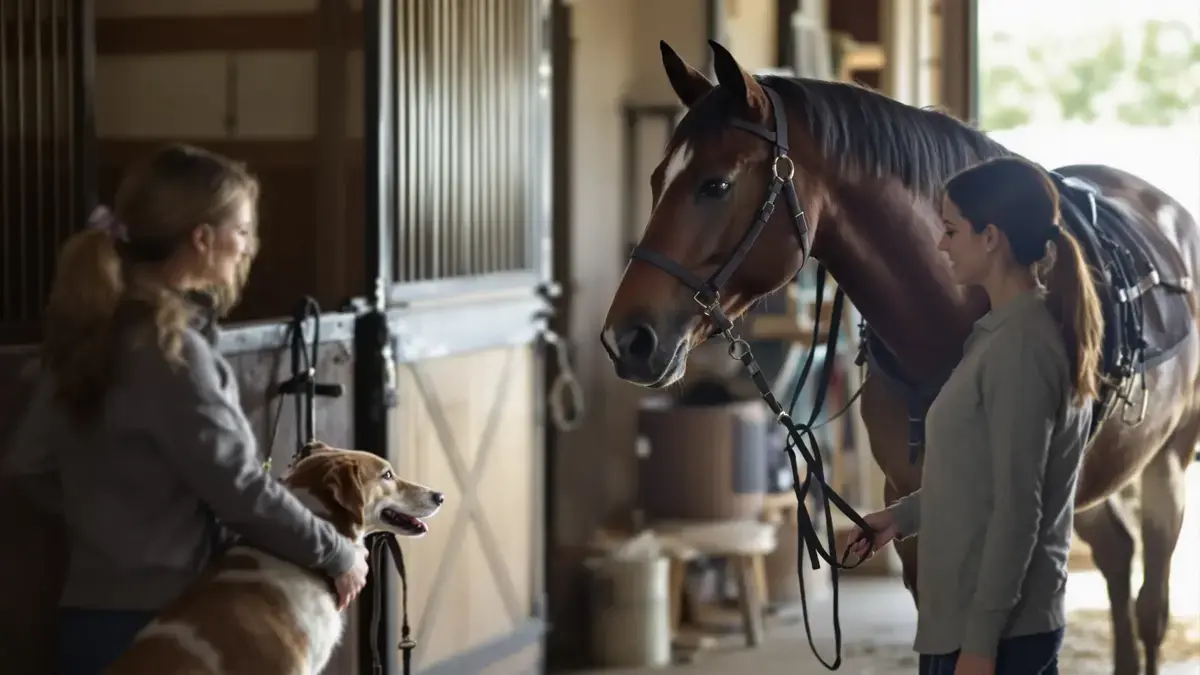

In the quiet of a stable, a dog’s paws may echo softly as a horse shifts its weight in a neighboring stall. The sight is familiar: two animals from different worlds adjusting to a shared environment, each wary but curious. For owners, the challenge lies in more than simple coexistence—the goal is structured, safe harmony between species with instincts at odds.
Everyday Scenes, Underlying Instincts
A stroll past fenced paddocks or a visit to a barn quickly reveals how different dogs and horses really are. One may bound forward with a wagging tail; the other may stand still, reflexively alert to sudden movements. This gap is rooted deep—horses experience the world as prey, their caution shaped by generations. Dogs, by contrast, carry the focus of predators, sometimes chasing or barking without pause.
These instincts do not simply disappear when they step into the same space. A startled horse can kick out or bolt. A determined dog may see a companion or a challenge. Recognizing this balance is the base for any safe introduction.
First Meetings: Patience and Precision
Bringing these animals together safely means planning ahead. Early meetings should take place somewhere calm and enclosed. The dog stays leashed, the horse handled by someone experienced. Distance is your starting point. There’s no rush—a gentle sniff from a dog signals interest, but a horse may need to step away for comfort.
Small, positive interactions shape early memories. A calm dog is praised; a relaxed horse receives a pat. These moments accumulate, gradually letting them come closer, though never forced. The timeline varies for every pair. Sometimes, progress is measured in steps rather than days.
Obedience: The Dog’s Essential Role
Dog obedience offers a safety net. Skills like “recall,” “stay,” and “heel” aren’t only tricks—they are essential controls in a setting where unpredictability can endanger both animals. If a dog circles, barks, or rushes, the horse may panic. Breeds with strong chase instincts, such as beagles or collies, often need more supervision.
A well-trained dog is allowed more freedom, but only once they respond reliably even when excited or distracted. Training sessions near horses, at varying times of day and types of activity, help solidify these habits.
Listening for Limits
Not all horses or dogs wish for close company. Some horses remain anxious, no matter the approach. Others may respond with agitation or defensive gestures—ears pinned, hoof pawing the ground. Some dogs, especially those prone to fear, react with avoidance, growling, or excessive panting. Forcing interaction, even with good intentions, can tip situations toward aggression.
Respect means sometimes keeping them apart. Successful cohabitation does not require constant proximity.
Shared Spaces: New Hazards
Stables are busy worlds. New smells drift in, equipment lies close at hand, and movement is constant. In this world, a loose dog can dart under hooves or slip unnoticed behind vehicles. Horses themselves have territory—boxes, waterers, and feed that dogs must avoid.
Simple rules matter: never allow a dog under a horse’s feet. Keep access to stalls and wires restricted. Children, machinery, and other animals raise the stakes even higher.
Boundaries and Routine Make Coexistence Easier
Clear boundaries help both animals relax. Dogs benefit from predictable routines—knowing when they may join a walk, or when to stay at a distance. Physical spaces, such as a quiet crate or a designated area, offer the dog respite away from the bustle of horses.
Consistent enforcement of these zones and schedules provides reassurance and reduces the risk of accidents.
Health and Early Intervention
Health is a shared responsibility. Dogs, especially those in frequent contact with horses, require up-to-date vaccinations and regular deworming to limit the risk of cross-species infection. Owners should watch for troublesome behaviors: licking a horse’s wounds, nipping, or chasing. It is easier to address issues early than to correct entrenched patterns.
Both animals communicate in subtle ways. Recognizing stress or discomfort in body language—ears, posture, breathing—can prevent tension from building.
Harmony, Beyond Simple Presence
Building a peaceful relationship between dogs and horses is a slow, attentive process. The aim is not for them to become inseparable, but to coexist safely and with mutual respect. Achieving this means adjusting expectations to the temperament and needs of each animal, accepting setbacks, and intervening at the first signs of conflict.
In managed hands, two different instincts can find a workable truce—one paw, one hoof at a time.
