
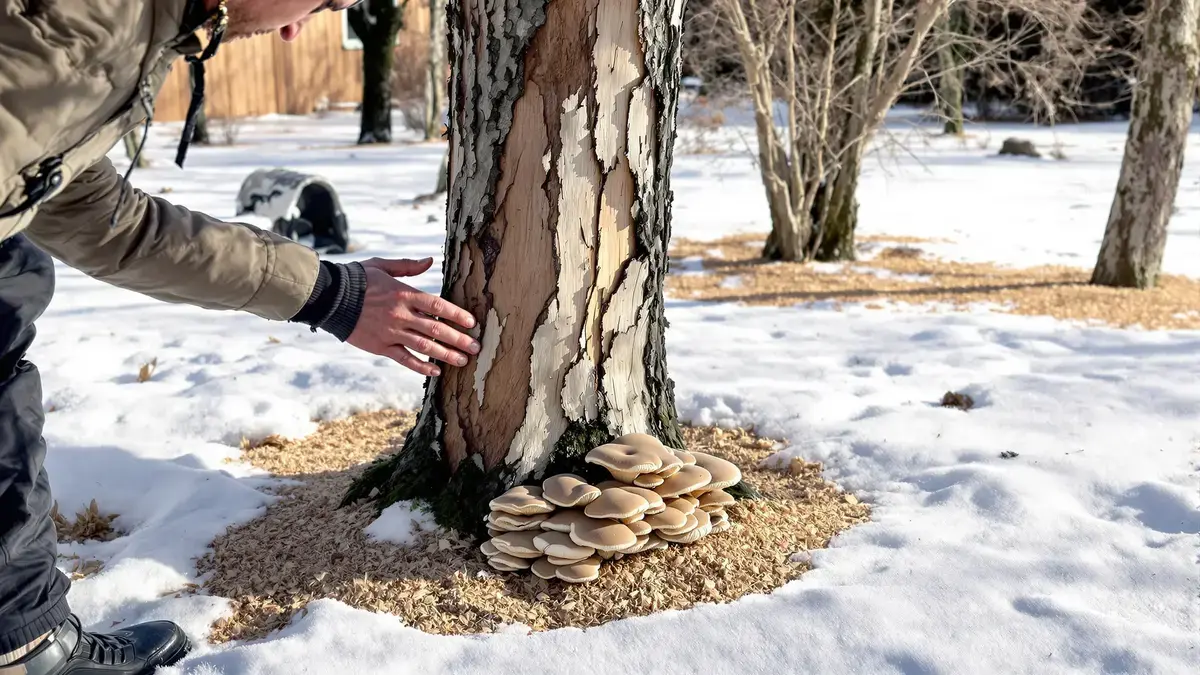

Thick winter coats drape backyard trees, their branches casting faint shadows on the snow below. From the kitchen window, familiar shapes stand, seemingly quiet, while the season disguises early distress. Yet, even in January’s stillness, signs linger—signals that can reveal hidden trouble inside garden trees.
Catching Subtle Shifts in Winter
At first glance, many trees appear lifeless during colder months. Leaves have long since fallen, and bark seems unchanging. But small irregularities hide in plain sight. A persistent patch of peeling bark or clusters of fungi near the base can whisper that illness has found a foothold. Even a ring of sawdust circling a trunk or scattered on the ice may point to insects at work within.
When Branches Lose Their Shape
Nature often hints before damage becomes severe. Healthy branches bend with winter’s weight, but brittle, snapping limbs signal underlying stress. Sometimes, a greyish dust clings just at the split—a mark left by disease or decay setting in beneath the surface. Unusual swelling or odd growths at joints also stand out, especially when lit by low afternoon sun.
Color Changes Under Frost
Tree trunks don’t usually change much in color. But gradual shifts to dark, sunken patches or streaks of orange beneath cracked bark become easier to spot against pale backgrounds. Lichen and moss can grow on healthy bark, yet the spread of dark, sticky stains—especially near pruning wounds—may tell a different story. These changes are more than just cosmetic; they sometimes mark the fence between recovery and loss.
Why Early Signs Matter
Winter forms a quiet test for a tree’s resilience. While cold slows visible change, the roots and wood still respond to stress from disease and invading pests. Spotting early warning signs matters, not just for individual trees but for everything living nearby. Shifts in the health of one species ripple outward, shaping which plants survive the coming spring, and how animals find shelter.
Ecology in Motion
Recent events—even the arrival of invasive species in unexpected landscapes—show how environmental boundaries are never fixed. Trees in gardens have adapted to long seasons of cold, but new threats can test these limits. Observing trees closely in winter isn’t just about protecting property. It’s a glimpse into the ongoing, restless balance between plants, climate, and the shifting cast of the natural world.
